Transportation Asset Management: Planning, Analytics, and Investment Optimization
Fee: $1,605 / Online / Jun 21 - 22, 2027 / Course Code: 18-0607-ONL27
OVERVIEW
Please note, This instructor-led course has specific dates and times:
This course is held online over 2 days on the following schedule (All times in Eastern Time Zone): 9:30 am to 5 pm Eastern (Will include the usual breaks)
By the end of this course, you will be able to:
Apply transportation asset management principles to align infrastructure decisions with organizational objectives and regulatory requirements
Develop performance measures and Levels of Service that support planning, monitoring, and reporting
Integrate condition, risk, lifecycle, financial, and operational data to evaluate asset needs and investment options
Prioritize maintenance and capital investments using structured, risk-based decision frameworks
Build and interpret Power BI dashboards that communicate asset performance and support evidence-based decisions
Description
Transportation infrastructure decisions must account for aging assets, constrained funding, climate-related risks, changing service expectations, and long-term network performance. When asset information is incomplete, fragmented, or disconnected from organizational priorities, it becomes difficult to justify investments, compare intervention options, and direct resources where they will provide the greatest value.
This course provides a structured approach to managing transportation assets using performance measures, Levels of Service, lifecycle analysis, risk assessment, and investment prioritization. You will learn how to connect asset condition, operational, financial, maintenance, and spatial data to support defensible decisions. Practical exercises will help you evaluate investment alternatives, develop performance frameworks, and establish priorities for roads, bridges, culverts, and other transportation assets.
You will also learn how to use Power BI to organize, analyze, and communicate transportation asset information. Through applied workshops and case studies, you will develop dashboards, executive scorecards, and decision frameworks that support capital planning and performance reporting. The course will help you contribute to Transportation Asset Management Plans that align with ISO 55000 principles, Ontario Regulation 588/17, and broader organizational objectives.
Who Should Attend
This course is designed for:
Transportation engineers
Municipal and public works engineers
Asset management professionals and coordinators
Transportation and infrastructure planners
Capital planning specialists
Transportation program and corridor managers
Operations and maintenance managers
Transportation data and business intelligence analysts
GIS professionals
Infrastructure consultants
Professionals working with municipal, regional, or provincial transportation agencies
Infrastructure owners and operators
Participant Requirements
Participants are encouraged to install Power BI Desktop before the course.
Participants are encouraged to install Power BI Desktop before the course.
Recommended to Install Power BI Desktop:
Microsoft Download Center: https://www.Microsoft.com/en-us/download/details.aspx?id=58494
SYLLABUS
DAY 1
Module 1: Strategic Transportation Asset Management
Transportation asset management maturity
Strategic versus operational decision-making
Aligning transportation investments with organizational objectives
Enterprise asset management principles
Governance and decision frameworks
Ontario Regulation 588/17 requirements
Industry best practices and emerging trends
Module 2: Measuring Transportation System Performance
Customer and technical Levels of Service
Performance-based asset management
Transportation performance measures
Key Performance Indicators (KPIs)
Asset health indicators
Benchmarking and performance reporting
Module 3: Data Analytics for Transportation Asset Management
Asset data governance
Data quality management
Enterprise data integration
GIS and spatial analytics
Financial and maintenance data integration
Data maturity assessment
Workshop- Transforming Data into Decisions
Analyze transportation datasets and identify opportunities to improve decision-making through analytics and forecasting. Develop a transportation performance framework and executive scorecard.
Module 4: Investment Planning and Portfolio Prioritization
Investment prioritization frameworks
Multi-Criteria Decision Analysis (MCDA)
Infrastructure decision trees
Evaluating investment alternatives
Deferred investment impacts
Service level impacts
Workshop- Evidence-Based Capital Planning
Develop a risk-based transportation capital investment program using decision trees and prioritization frameworks.
DAY 2
Module 5: Introduction to Power BI for Transportation Asset Management
Getting Started with Power BI
Introduction to Business Intelligence
Role of Power BI in asset management
Power Query fundamentals
Data modeling basics
Building reports and dashboards
Data preparation principles
Basic calculations and measures
Workshop - Building Transportation Dashboards
Build a transportation performance dashboard using sample transportation asset data.
Module 6: Performance Analytics and Business Intelligence
Performance Reporting and Visualization
Advanced Transportation Dashboards
Transportation Dashboard Examples
Case Study
Module 7: Advanced Decision Analytics and Predictive Asset Management
Decision support frameworks
Business case development
Infrastructure performance storytelling
Asset deterioration modeling
Predictive Analytics and Machine Learning
Module 8: Case studies - Decision Trees for Transportation Planning
Bridge intervention decisions
Pavement treatment selection
Culvert replacement prioritization
Capital investment decision analysis
Emerging Technologies (e.g. Artificial Intelligence, Digital Twins, Enterprise Asset Management Systems)
INSTRUCTOR
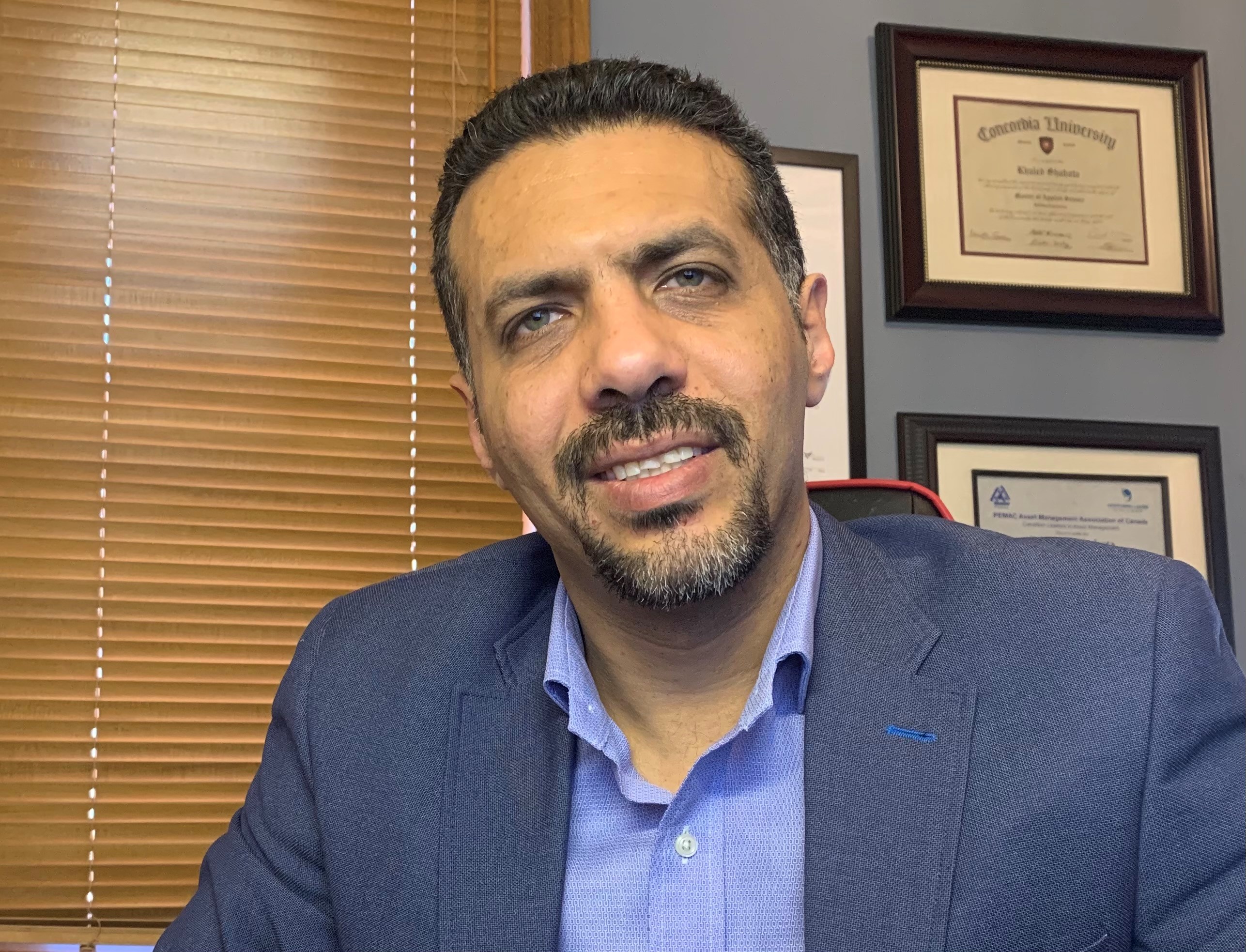
Project Manager, Asset Management
Khaled is an infrastructure asset management and engineering professional with more than 20 years of experience spanning consulting, municipal government, regional infrastructure programming, and provincial transportation. His work focuses on helping organizations make better decisions about how infrastructure is planned, funded, maintained, and renewed.
Khaled currently serves as a Lead Engineer, Asset Management with the Ontario Ministry of Transportation, supporting enterprise asset management, investment planning, rehabilitation prioritization, and strategic infrastructure decision-making.
Previously, Khaled served as Program Manager, Asset Management and Infrastructure Programming – Transportation with the Region of Peel, where he led strategic infrastructure planning initiatives and coordinated multidisciplinary teams responsible for capital programs, performance measures, investment strategies, and implementation plans. Working closely with engineering, operations, finance, and executive leadership, he supported evidence-based investment decisions and resource optimization across a diverse transportation infrastructure portfolio..
Prior to that, Khaled led the Corporate Asset Management Division at the City of London, overseeing asset management across a diverse municipal portfolio, including transportation, water, wastewater, stormwater, facilities, parks and recreation, fleet, waste management, and information technology. His work included asset management strategy, lifecycle planning, infrastructure risk, service levels, funding strategies, capital investment planning, and decision-support tools.
Alongside his professional practice, Khaled is involved in university and professional education, teaching and developing courses for universities, municipalities, government agencies, infrastructure organizations, and First Nations communities across Canada. He is passionate about connecting asset management theory with the practical challenges practitioners face in infrastructure planning, investment, risk, performance, and decision-making.
Khaled holds a PhD and M.A.Sc. in Construction Management from Concordia University, a Diploma in Public Administration from Western University, and a B.Sc. in Civil Engineering from Cairo University. He is a Professional Engineer and a Certified Asset Management Professional.
Khaled is Chair of Asset Management Ontario (AMONTario), supporting collaboration and the advancement of asset management practice across Ontario. He previously served as Regional Director – Ontario with the Canadian Network of Asset Managers (CNAM) and has contributed to national conferences, professional development, and industry initiatives.
We always want to improve the quality of our courses. Please select any reasons why you feel this course is inadequate (check all that apply).
Thanks for the feedback.
Your input helps us improve EPIC's training programs.
We couldn't record that feedback.
This course's ID doesn't match anything in our records. Please refresh the page and try again, or contact registrations@epictraining.ca.