Watershed Risk Management
Fee: $1,595 / Online / Oct 7 - 8, 2027 / Course Code: 18-1010-ONL27
OVERVIEW
Please note, This instructor-led course has specific dates and times:
This course is held online over 2 days on the following schedule (All times in Eastern Time Zone): 10:00 am to 6:00 pm Eastern (Will include the usual breaks)
By the end of this course, you will be able to:
Apply structured risk‑based thinking to watershed management challenges
Assess and interpret uncertainty in hydrological and flood risk analyses
Incorporate climate change data and assumptions into watershed risk assessments
Evaluate hydrological and hydraulic model outputs to support sound decisions
Identify practical tools and strategies used in watershed and flood risk management
Description
Managing watersheds increasingly requires making technical decisions under uncertainty. Climate change, non‑stationary hydrologic conditions, data limitations, and complex system interactions all influence flood and watershed risks, yet professionals are often expected to develop defensible strategies with incomplete or evolving information.
This course provides a practical foundation in watershed risk management, focusing on how uncertainty affects hydrological analysis, flood risk assessment, and decision‑making. You will examine core risk concepts, explore how climate change assumptions propagate through models, and learn how hydrologic and hydraulic uncertainties influence risk outcomes, particularly in northern and cold‑region contexts.
Through structured frameworks and applied examples, this course equips you with tools to better interpret model results, communicate risk, and support resilient watershed management decisions. No specialized background in hydrology is required; the course is designed to make complex concepts accessible and directly applicable to professional practice.
Who Should Attend
This course is designed for:
Water resources and river engineers
Civil and environmental engineers
Engineering technologists and technicians
Environmental specialists and consultants
Project managers involved in watershed or flood‑related projects
Professionals responsible for risk assessment, mitigation, or planning in the water sector
SYLLABUS
Day 1 – Hydrology and Climate Change (Saman Razavi)
Risk Fundamentals
Overview of climate-related risks
Uncertainty sources and the notion of deep uncertainty
Stationarity assumptions in a non-stationary world
Climate Change
IPCC scenarios of socio-economic changes
Insights through climate models
Incorporating climate change data into hydrological calculations
Basin Hydrology
Watershed parametrizations
Hydrologic model calibration and uncertainty analysis
Hydrologic uncertainties affecting risks
Hydrological risk
Day 2 – Surface Waters (Karl-Erich Lindenschmidt)
Fluvial Floods
Open-water floods
Ice-jam floods
Hazard
Flow frequency distributions
Stage frequency distributions
Shifts in distributions due to climate change
Risk
Vulnerability
Flood risk mapping and assessment
Flood risk mitigation
INSTRUCTOR
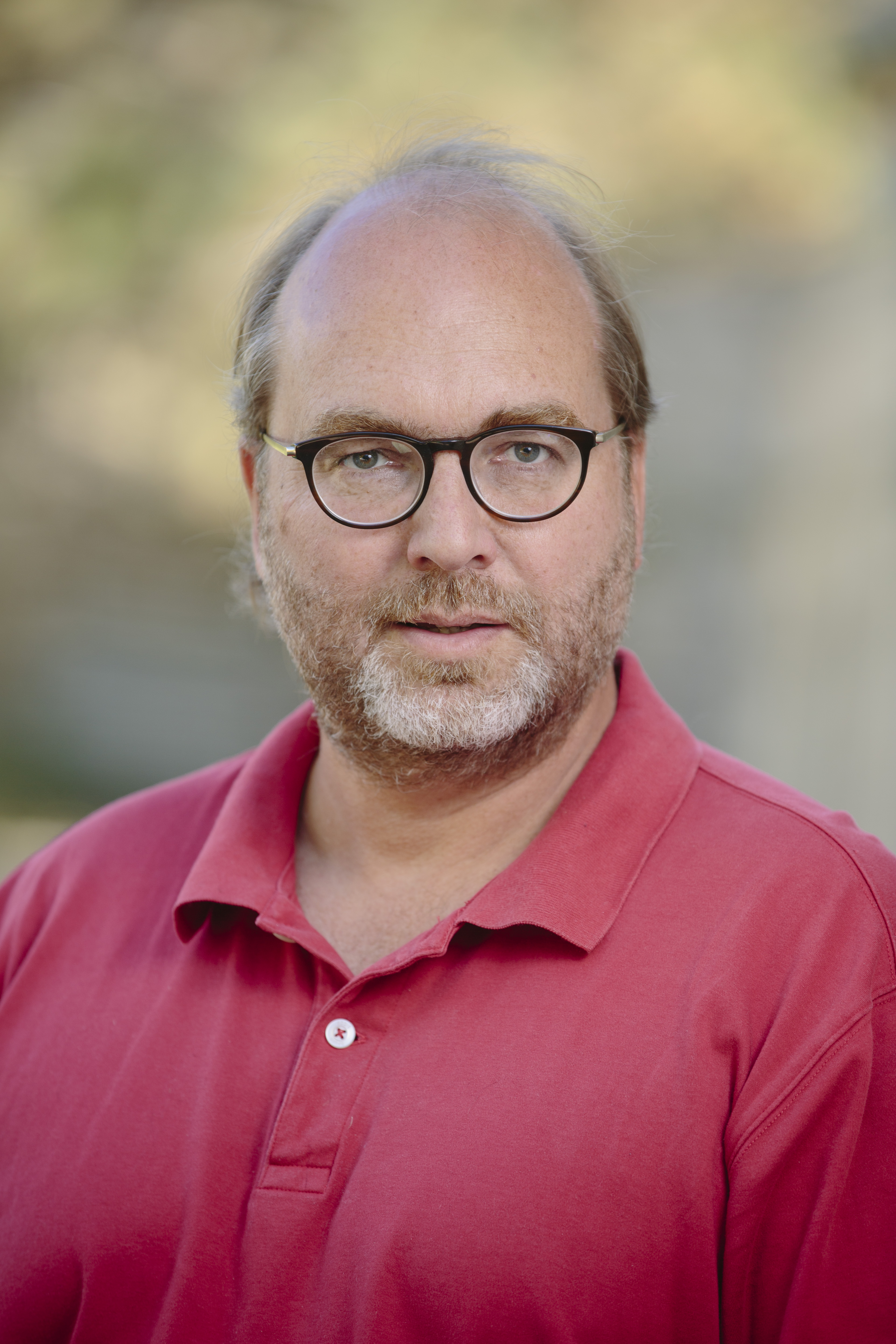
Karl is an associate professor at the University of Saskatchewan and a member of APEGS.
He holds a Bachelor of Science in Mechanical Engineering from the University of Manitoba, a Master of Applied Science in Mechanical Engineering from the University of Toronto and a PhD in Environmental Engineering from the Technical University of Berlin. Before his appointment at the University of Saskatchewan, Karl was with the Manitoba Water Stewardship as a hydrologic modelling research engineer, where one of his research topics involved monitoring and modelling river ice processes along the Red, Assiniboine and Dauphin Rivers.
His knowledge on river ice processes aided Red River Floodway operations, the Ice Jam Mitigation Program along the lower Red River and flood risk management of the Lake St. Martin/Dauphin River System. He has also extended his portfolio of river ice work and research to include the Slave River in the Northwest Territories, the Peace and Athabasca Rivers in Alberta, and the South Saskatchewan and Qu'Appelle Rivers in Saskatchewan.
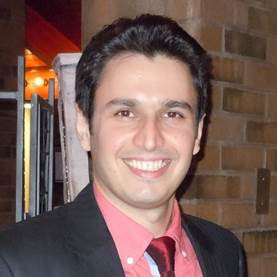
Dr. Saman Razavi is an Associate Professor of hydrology and water resources engineering at the School of Environment and Sustainability, Department of Civil, Geological and Environmental Engineering, and Global Institute for Water Security, University of Saskatchewan. He received a Ph.D. in civil engineering from the University of Waterloo in 2013.
Dr. Razavi’s research is at the science-policy interface, bridging hydrological modelling and predicting flood and drought events to integrated management of water and environmental systems and decision and policy making. He develops methods based on systems and data sciences, sensitivity and uncertainty analysis, and machine learning. He is the lead developer of VARS-Tool, which is a toolbox for sensitivity and uncertainty analysis (https://vars-tool.com/), and the Principal Investigator of the Integrated Modelling Program for Canada (https://gwf.usask.ca/impc/).
Dr. Razavi has taught courses in engineering hydrology at the undergraduate level, where he modernized the existing curriculum. At the graduate level, he has offered advanced watershed modelling, optimization, and sensitivity and uncertainty analysis courses. Dr. Razavi has advised governments on important water-related issues, including drainage impacts in the prairies, water licensing and allocation, and tradeoffs between irrigation expansion, hydropower and environmental or cultural flows. He contributes to the engineering and scientific community through his role on the editorial boards of the Journal of Hydrology, Environmental Modelling & Software, and Frontiers in Water. He is also the past chair of the American Geophysical Union (AGU)’s Technical Committee on Hydrologic Uncertainty and has run many sessions at multiple national and international conferences.
Dr. Razavi is the recipient of several awards, including the 2020 Early Career Research Excellence Award from the International Environmental Modeling and Software Society and the 2019 Young Scientist Award from the Canadian Geophysical Union. His research has been featured in media, such as CBC, CTV, and Radio Canada.
We always want to improve the quality of our courses. Please select any reasons why you feel this course is inadequate (check all that apply).
Thanks for the feedback.
Your input helps us improve EPIC's training programs.
We couldn't record that feedback.
This course's ID doesn't match anything in our records. Please refresh the page and try again, or contact [email protected].