Fundamentals of Modern Substation Equipment, Protection and Controls
Fee: $3,845 / Online / Apr 12 - 16, 2027 / Course Code: 17-0405-ONL27
OVERVIEW
Please note, This instructor-led course has specific dates and times:
This course is held online over 5 days on the following schedule (All times in Eastern Time Zone): 10 am to 6 pm Eastern (Will include the usual breaks) Please note that it is a requirement for all attendees to sign a "Confidentiality Agreement" prior to receiving the course notes for this online offering.
By the end of this course, you will be able to:
- Evaluate and select substation equipment and protection schemes based on system requirements, operational constraints, and reliability objectives
- Apply structured approaches to the design, coordination, and performance assessment of substation protection and control systems
- Interpret single-line diagrams and control schematics to support accurate analysis, troubleshooting, and decision-making
- Assess grounding, power conditioning, and equipment configurations to improve system safety and operational performance
- Identify and address risks associated with equipment selection, protection coordination, and substation operation
Description
Substations play a critical role in the reliability and safety of electrical power systems, but equipment selection, protection coordination, and system configuration decisions are often made under complex technical and operational constraints. Inadequate understanding of how equipment and protection systems interact can lead to miscoordination, reduced system reliability, and increased risk to both infrastructure and personnel.
This course provides a structured, practical foundation for evaluating and applying modern substation equipment, protection schemes, and control systems in real-world environments. Rather than focusing on isolated components, the course emphasizes how equipment, protection, grounding, and control strategies work together to support safe and reliable system performance.
Through applied examples and engineering-focused discussion, participants will strengthen their ability to make informed decisions related to substation design, operation, and maintenance. The course equips you with practical approaches that can be applied directly to improve system reliability, mitigate risk, and support effective substation performance in your professional practice.
Who This Course Is For
This course is designed for:
- Electrical engineers involved in the design, analysis, or operation of substations
- Engineers and technologists working in industrial, utility, or power distribution environments
- Engineering professionals responsible for protection systems, equipment selection, or system performance
- Project engineers, consultants, and technical specialists involved in substation projects
- Early-career to senior practitioners seeking to strengthen practical substation knowledge and decision-making capability
SYLLABUS
Introduction to Electrical Power Distribution Systems
- Canadian Electrical Code
- Voltage classifications
- Fundamentals of electrical power distribution system operation
Introduction to Electrical Drawings
- Standards for electrical controls, international context
- Standard electrical symbols
- Single line diagrams
- Schematic and wiring diagrams
Grounding and Bonding of Electrical Equipment
- Equipment Grounding – Bonding
- Source and distribution of ground currents
- Grounding Electrodes
- Substation grounding and concepts for safety
LV and MV System Grounding
- System Grounding options
- Arc Flash hazard
- detection and locating ground faults
- Grounding in multiple source systems
Modern Substation Types and Purposes
- Fundamentals of electrical substation operation
- Primary unit substations
- Secondary unit substations
- Substation circuit arrangement
Power Transformers and Controls
- Major components
- Construction and operation
- Connections and ratings
- Fixed taps and LTCs
Bus and Disconnect Switches
- Types and applications
- Manual and motor-operated switches; control schematics
Power Circuit Breakers
- Purpose and types
- Construction and operation
Metal-Clad Switchgear
- Advantages and applications
- Construction and operation
- Protection and control
Power Supply Systems
- Battery systems
- Purpose and ratings
- Chargers and charging control systems
- Station power requirements
- Back-up supplies/sources
- Source transfer control schemes
Power Conditioning Systems
- Classification of equipment requiring power conditioning
- Standby versus uninterruptible power
- Categories of power conditioners
- Review of power conditioner types
Power Capacitor and Capacitor Banks
- Principles of power capacitor application
- Power capacitor construction and operation
- Capacitor bank construction and operation
- Switching and protection control schemes
Substation Commissioning
- Acceptance testing equipment
- Start-up procedures
- Energizing equipment
Case Study Commissioning of 27 KV Switchgear
Fundamentals of Power System Protective Relaying Systems
- Power system faults
- Requirements of protective relaying systems
- Detection and clearance of power System faults
- Basic fault calculations
- Components of protection systems
- Relay types: electromechanical, electronic and microprocessor-based relays
Instrument Transformers
- Voltage transformers and current transformers
- Theory of operation
- Burden, saturation, and accuracy
- Application and selection
- Testing of CTs and VTs
Coordination of Protection Systems
- Time-current coordination
- Protective relaying zones
- Backup protection on radial systems
- Breaker failure protection on interconnected systems
- Auto-reclosing of circuit breakers
Protective Relaying Systems
- Feeder overcurrent protection
- Bus protection – a fundamental principle of differential protection
- Transformer protection
Discussion of Problem Set Given as in Class Assignment
Questions and Answers and Feedback to Participants on Achievement of Learning Outcomes
INSTRUCTOR
Chief Electrical Engineer
Mike has over 35 years of experience in power system protective relaying with the Central Electricity Generating Board in England and Ontario Hydro and is currently chief electrical engineer with Eastern Power Ltd.
Mr. Southwood took early retirement from Ontario Hydro after 25 years of service. He was a Senior Protection & Control Engineer in Cherrywood District, responsible for commissioning and maintaining protective relaying, control and metering schemes on the 500 kV, 230 kV and 44 kV systems. Mr. Southwood is currently a Chief Electrical Engineer with Eastern Power Ltd., a company that designs, builds and operates non-utility generating stations.
He has conducted numerous seminars/courses on power system protection for various industries and universities in major North American cities and for various overseas electrical utilities.
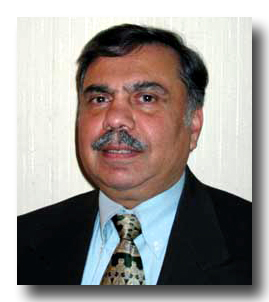
Power Solutions
North York, ON
Ajit is well known in the electrical distribution field for his 40 years of expertise in the art and science of ground fault protection.
He holds Master's degrees in business administration and electrical engineering, specializing in power systems and power system protection. He has particular interest in ground fault protection; digital metering systems; microprocessor based integrated systems for protection; and the metering, monitoring, and control of power distribution systems. A member of Professional Engineers Ontario, he is also a senior life member of the IEEE.
We always want to improve the quality of our courses. Please select any reasons why you feel this course is inadequate (check all that apply).
Thanks for the feedback.
Your input helps us improve EPIC's training programs.
We couldn't record that feedback.
This course's ID doesn't match anything in our records. Please refresh the page and try again, or contact registrations@epictraining.ca.