Mechatronics: Modelling and Control of Dynamic Systems
Fee: $1,595 / Online / Mar 15 - 16, 2027 / Course Code: 17-0323-ONL27
OVERVIEW
Please note, This instructor-led course has specific dates and times:
This course is held online over 2 days on the following schedule (All times in Eastern Time Zone): 9:30 am to 5:30 pm Eastern (Will include the usual breaks)
By the end of this course, you will be able to:
- Develop mathematical models of mechanical and electrical systems using dynamic equations
- Analyze system behaviour using transfer functions, stability criteria, and frequency response methods
- Design closed-loop control systems using sensors, actuators, and structured control logic
- Tune PID controllers to achieve stable and optimized system performance
- Apply control strategies across mechanical, electrical, hydraulic, and thermal systems
Description
Modern engineering systems rely on tightly integrated mechanical, electrical, and control components to operate reliably and efficiently. In practice, designing or improving these systems requires the ability to model dynamic behaviour, assess system stability, and implement control solutions that perform under real‑world conditions.
Without a structured approach to system modelling and control design, predicting performance and diagnosing issues becomes difficult, increasing the risk of instability, inefficiency, or system failure. Engineers must be able to translate physical systems into analytical models and apply control strategies that ensure consistent and predictable operation.
This course develops the practical skills required to model dynamic systems, analyze their behaviour, and design effective control solutions. Through applied examples and structured methods, you will build the ability to evaluate system performance, tune control parameters, and apply control concepts across a range of engineering applications.
Who Should Attend
This course is designed for:
- Engineers and engineering technologists working with mechanical, electrical, or control systems
- Professionals involved in automation, robotics, or system design
- Technical practitioners responsible for system performance, analysis, or troubleshooting
- Early-career through senior professionals seeking to strengthen applied control system skills
SYLLABUS
Day I
- Introduction to mechatronics.
- Mathematical modelling, Laplace transform, and transfer function:
- Differential equations.
- Transfer function.
- First- and second-order systems:
- Modelling first- and second-order systems.
- Response of first- and second-order systems to unit impulse, unit step, and unit ramp inputs.
- Stability criteria for a system.
Day II
- Closed-loop control.
- Sensors and actuators.
- Block diagrams:
- Simplification of block diagrams for closed-loop control systems.
- PID controller (Proportional, Integral, Derivative):
- PID equation.
- Functioning of a PID.
- Impact of PID parameters on system control.
- Frequency analysis:
- Components of frequency analysis.
- Bode diagrams for first- and second-order systems.
- Design and tuning of control systems.
- Application examples: mechanical, electrical, hydraulic, and thermal.
Question Period:
- Conclusions and end of the course.
INSTRUCTOR
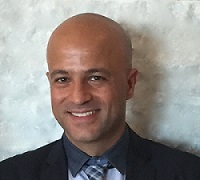
Professeur associé — l'École de technologie supérieure (ETS)
St-Laurent, QC
Mr. Kaddissi holds a Bachelor's degree in Mechanical Engineering, a Master's degree in Industrial Control, and a PhD in Nonlinear and Nondifferentiable Control of Electrohydraulic Systems. He is also certified as a Project Management Professional (PMP) by the PMI (Project Management Institute).
Mr. Kaddissi has over 7 years of experience in hydraulic system design and analysis, primarily in mobile hydraulics, with clients such as John Deere, Eaton, Hydraforce, Volvo, and JCB. He also has more than 8 years of experience in hydroelectric power plant project management. Mr. Kaddissi is also an adjunct professor at the École de technologie supérieure, where he teaches hydraulics and pneumatics to mechanical engineering graduate students and co-supervises graduate students.
We always want to improve the quality of our courses. Please select any reasons why you feel this course is inadequate (check all that apply).
Thanks for the feedback.
Your input helps us improve EPIC's training programs.
We couldn't record that feedback.
This course's ID doesn't match anything in our records. Please refresh the page and try again, or contact registrations@epictraining.ca.