Essential Concepts of Automation and Control Systems
Fee: $1,595 / Online / Mar 30 - 31, 2027 / Course Code: 17-0318-ONL27
OVERVIEW
Please note, This instructor-led course has specific dates and times:
This course is held online over 2 days on the following schedule (All times in Eastern Time Zone): 10 am to 5:30 pm Eastern Time
By the end of this course, you will be able to:
- Analyze and configure basic control systems, including open-loop and closed-loop architectures
- Apply PID control principles to maintain system stability and performance
- Evaluate SCADA systems and key automation components for operational effectiveness
- Design and troubleshoot control system elements to resolve performance issues
- Integrate automation solutions to improve productivity, safety, and efficiency
Description
Modern industrial systems depend on automation and control mechanisms to maintain stability, ensure safety, and optimize performance. However, many environments involve complex interactions between hardware, software, and process variables, making it challenging to diagnose issues, tune systems effectively, or implement improvements with confidence.
This course provides a practical foundation in automation and control systems, focusing on how core concepts are applied in real operational contexts, from simple to complex. Key topics include control system architecture, PID control, SCADA systems, and communication protocols. Emphasis is placed on understanding system behaviour, identifying performance gaps, and applying structured approaches to design, commissioning, and troubleshooting.
Through applied examples and exercises, this course builds the capability to assess, configure, and improve automation systems. The result is stronger decision-making, improved system performance, and more efficient operations across a range of industrial applications.
Who Should Attend
This course is designed for:
- Engineers and engineering technologists working with automation or control systems
- Technical professionals involved in system design, commissioning, or troubleshooting
- Maintenance, operations, and production professionals responsible for system performance
- Early-career to experienced practitioners seeking a practical foundation in control systems and SCADA
SYLLABUS
Day I
Fundamentals of Control Systems and Automation
- Systems and controlled systems benefit and historical trends
- Concepts and principles
- Linear and non-linear control systems
From Mechanization to Automation and Beyond
- Analog vs digital world
- Number representation in computers.
- Practical exercises
- Introduction and system theory
- Definitions and system terms
- System functions
- Elements of a control system
- Open and closed loops
- Feedforward and Cascade loops
- Proportional, Integral and Derivative control
- P, PI and PID Tuning methodology
Components of Control Systems
- Controllers: Theory of operation
- Hardware architecture: Sensors, Controllers, Actuators, Comms
- Analog to Digital Conversion
- Digital to Analog Conversion
- Software architecture: PLC (Programmable Logic Controller), RTU (Remote Terminal Unit), Embedded solution, Pros and cons
- Communications: Error Detection, Handshaking, Multiple Attempts
- Control System Technical Spec: Practical example.
From RTU to PLC and SCADA
- IEC 61131-3 standard for PLCs
- SCADA, industrial architecture tool for high-level process supervisory management
Day II
Distributed Versus Centralized Control Methods
- Digital logic gates, practical exercises
- Communication interfaces: Serial, Ethernet, USB, wireless, networks, web
- HART protocol
- Modbus protocol
- Ethernet protocol
Measuring and Testing
- Statistics, basic ideas
- Root cause analysis, practical example
Industrial Automation
- Data processing and presentation tools
- SCADA modes of operation: operator mode, programming mode, maintenance mode, training mode
SCADA (Supervisory Control and Data Acquisition) Design, Troubleshooting and Commissioning
- Engineering model for distributed automation and control
- SCADA modules: visualization, databases, alarm handling, reports, logging and data archiving
- Alarms handling, practical considerations, and examples
INSTRUCTOR
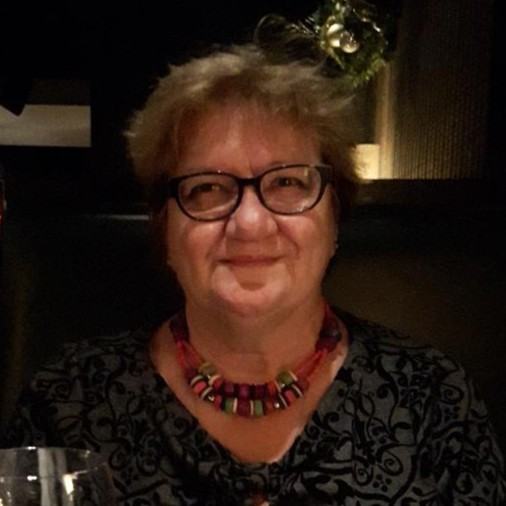
Corina was System Engineering Manager with Curtiss Wright before recently retiring. She has years of experience in system engineering and control systems. She is also a present member of INCOSE (International Council of Systems Engineering) and has served on the board of TASSQ (Toronto Association of Systems and Software Quality) in the past.
We always want to improve the quality of our courses. Please select any reasons why you feel this course is inadequate (check all that apply).
Thanks for the feedback.
Your input helps us improve EPIC's training programs.
We couldn't record that feedback.
This course's ID doesn't match anything in our records. Please refresh the page and try again, or contact registrations@epictraining.ca.