Environmental Impact Assessment
Fee: $1,295 / Online / Sep 3 - 4, 2026 / Course Code: 17-0912-ONL26
OVERVIEW
Please note, This instructor-led course has specific dates and times:
This course is held online over 2 days on the following schedule (All times in Eastern Time Zone): 9:30 am to 5:30 pm Eastern (Will include the usual breaks)
After participating in this course, you will be able to:
- Understand how Environmental Impact Assessments (EIAs) are conducted at both Federal and Provincial levels in Canada, and become familiar with EIA-related legislation.
- Conduct the screening of proposed projects effectively.
- Navigate and implement procedures for public participation in the EIA process.
- Utilize various impact assessment methods.
- Devise mitigation measures and monitoring programs, and prepare EIA reports.
Description
Under the Impact Assessment Act (IAA), an Environmental Impact Assessment (EIA) may be required for designated projects like building mines, roads, or dams. EIA is a planning and decision-making tool to assess and address the impacts of the proposed development before they start.
EIA helps us understand the project's environmental setting, predict the potential impacts and suggest measures to mitigate the adverse impacts if there were any. EIA includes components of monitoring and follow-up programs to ensure the impacts are managed in compliance with sustainability and applicable regulations. Benefits of conducting an EIA include protecting the environment and human health, avoiding adverse effects, increasing positive results, and enhancing understanding of project impacts from the input of Indigenous peoples and the public.
The main objective of this workshop is to introduce attendees to the basics and principles of Environmental Impact Assessment. The specific goals are to provide the following:
- A general understanding of the federal legislative framework for EIA
- An introduction to the Impact Assessment Agency of Canada and its online resources
- A review of the main steps and procedures for conducting EIAs
- An overview of the required background information
- An introduction to harmonization between Federal and Provincial governments
Who Should Attend
Consultants involved in Environmental Assessment • Project Developers in the Public and Private Sectors who would require an understanding of the EIA Process for Possible Review of EIA Reports and Environmental Engineers and Practitioners.
SYLLABUS
Syllabus
- EIA Legislation Definitions
- Screening and Scoping
- Public Participation
- Environmental & Social Impacts Identification
- Impact Analysis
- Baseline and Existing Conditions
- Mitigation and Impact Management
- Impact Assessment Methods
- Monitoring and Follow-up
- EIA Report
- Harmonization between Federal and Provincial EIA Systems
- Case Studies
- Questions and Answers
INSTRUCTOR
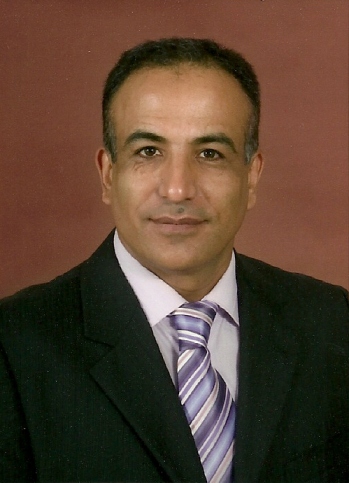
Professor of Environmental Engineering — University of Ottawa
, ON
Majid Sartaj is a registered Professional Engineer and a faculty member in the Civil Engineering Department of the University of Ottawa. He holds a BSc degree in Civil Eng. and a MSc and PhD in Environmental Eng. Dr. Sartaj has over 20 years of experience in academia and consulting in Environmental Engineering and Waste Management. During this time, he has taught courses on the design of water & wastewater treatment, solid waste management, environmental impact assessment, environmental site assessment, and site and field investigation.
His research areas include sustainable solid waste management (SWM) technologies, with the main focus on Bioreactor Landfilling and biogas/renewable natural gas (NRG) production, remediation of contaminated soils, the application of adsorption and Ion-Exchange processes for removal of contaminants, and modelling their fate and transport in the environment. Dr. Sartaj is the author or co-author of around 100 research publications in peer-reviewed journals and conferences. He has supervised or co-supervised more than 40 graduate students.
Dr. Sartaj has actively participated and organized several national and international conferences.
We always want to improve the quality of our courses. Please select any reasons why you feel this course is inadequate (check all that apply).
Thanks for the feedback.
Your input helps us improve EPIC's training programs.
We couldn't record that feedback.
This course's ID doesn't match anything in our records. Please refresh the page and try again, or contact registrations@epictraining.ca.