Metallurgy and Welding 101
Fee: $1,565 / Online / Nov 22 - 23, 2027 / Course Code: 18-1102-ONL27
OVERVIEW
Please note, This instructor-led course has specific dates and times:
This course is held online over 2 days on the following schedule (All times in Eastern Time Zone): 10:00 am to 6:00 pm Eastern (Will include the usual breaks)
By the end of this course, you will be able to:
- Understand the properties and microstructure of the most common alloy families (steel, aluminum, copper, nickel, titanium, etc.)
- Select and apply the most appropriate shaping and assembly techniques
- Understand and integrate corrosion and fatigue resistance into product design and manufacturing
- Select appropriate heat treatments
- Understand metal characterization techniques (hardness, tensile, chemical analysis, etc.)
- Identify common welding processes
- Understand the types of welding defects and the applicable standards
- Identify common mistakes and problems to avoid
Description
This course will allow you to better understand the alloys commonly encountered in industrial applications and constitutes a practical introduction for non-metallurgists. It will enable you to become familiar with the most important concepts in the field: shaping and assembly processes, heat treatments and the basic theory of corrosion and fatigue.
The training will also demystify the different welding processes, applicable standards and the defects commonly encountered. Many case studies will be presented, and participants are encouraged to submit their examples.
Content
- Physical properties & microstructure of the most common alloys
- Selection of appropriate heat treatments
- Understanding metal characterization techniques
- Basic principles of corrosion
- The most appropriate shaping & assembly techniques
- Common welding processes
- Understanding the types of welding defects & the applicable standards
- Review of errors & common problems to avoid
Who This Course Is For
This course is designed for:
All Professionals working in the Industrial, Mining, Petrochemical & Civil Engineering Fields: Engineers • Inspectors • Technicians • Contractors
SYLLABUS
Day I
- Physical properties and microstructure of the most common alloys (steel, aluminum, copper, nickel, titanium, etc.).
- Selection of the appropriate heat treatments (quenching, annealing, normalizing).
- Understanding metal characterization techniques (hardness, traction, chemical analysis).
Day II
- Basic principles of corrosion.
- The most appropriate shaping and assembly techniques (welding, rolling, bending, casting).
- Common welding processes.
- Understand the various types of welding defects and the applicable standards.
- Overview of common errors and problems to avoid.
INSTRUCTOR
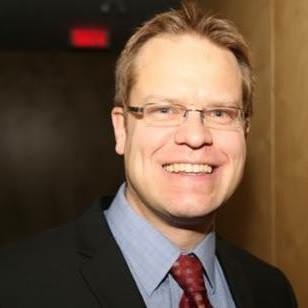
Forensic Engineer, Pressure Equipment & — CEP
, QC
Mr. Julien is an engineering graduate (1997) from l’École Polytechnique de Montréal in Mechanical Engineering specializing in manufacturing.
He is a member of the following Order of Engineers: Ontario (PEO) and Quebec (OIQ). He began his career in 1998 in the field of pressure equipment and storage tanks as a designer and quality manager at HC Vidal Ltd. (1998 to 2002). Then, as Quality Systems Manager at Xebec Inc. (2002 to 2007).
Afterwards, he became GCM Consultants’ Mechanical Integrity Group Manager (2007 to 2019). He is now a Forensic Engineer working for CEP Forensic. In addition to being an active ASME member, he is a certified API 510, API 570, API 571 and CSA W178.2 Level II (ASME B31.3, CSA W47.1/W59, CSA Z662) inspector.
See all other details of his career on his LinkedIn page.
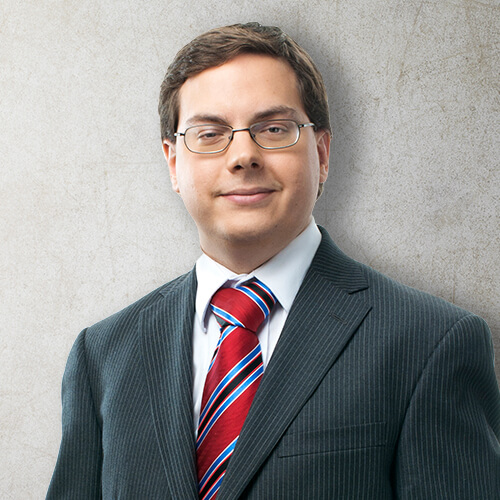
Senior Forensic Engineer — Experts-Conseils CEP inc.
Montréal, QC
Nicolas Geoffroy, P.Eng., Ph.D., Metallurgist, holds a bachelor's degree in materials engineering and a doctorate in metallurgy from McGill University. As a Metallurgical Engineer, he carries out on-site investigations, performs simulations and laboratory testing, analyses and characterizes macroscopically and microscopically all types of material and prepares expert reports. During his years of experience in the field of materials, he took part in various projects in the aerospace, oil and gas and extractive sectors in North America and Europe. He also though at the undergraduate level at McGill University, Canada.
He has conducted laboratory testing and simulations to verify hypotheses on the nature and cause of hundreds of failures involving metallic materials. He developed a specific expertise in the corrosion and cathodic protection fields. He presently works for CEP Forensic in the Materials and Chemistry group.
We always want to improve the quality of our courses. Please select any reasons why you feel this course is inadequate (check all that apply).
Thanks for the feedback.
Your input helps us improve EPIC's training programs.
We couldn't record that feedback.
This course's ID doesn't match anything in our records. Please refresh the page and try again, or contact registrations@epictraining.ca.