Planning and Design Safer Roads for Pedestrians and Cyclists
Fee: $795 / Online / Jan 19 - 21, 2027 / Course Code: 17-0112-ONL27
OVERVIEW
Please note, This instructor-led course has specific dates and times:
This course is held online over 3 days on the following schedule (All times in Eastern Time Zone): 10 am to 12:45 pm Eastern Time (Will include a 15-minute break)
By the end of this course, you will be able to:
- Apply a structured planning and design approach to improve pedestrian and cyclist safety across urban and suburban road networks
- Evaluate pedestrian and bicycle facilities using data collection, safety audits, and Vision Zero principles
- Select and justify appropriate facility types based on demand, context, and geometric constraints
- Integrate active transportation planning with land use, complete streets policies, and phased implementation strategies
- Design safer, more accessible pedestrian and cycling infrastructure using recognized Canadian and international guidelines
Description
Designing road networks that safely accommodate pedestrians and cyclists requires more than applying standard details. In practice, you are often asked to balance safety, accessibility, policy goals, land‑use constraints, and evolving travel behaviours, frequently with limited data and competing priorities. Decisions around facility type, geometry, and phasing have direct implications for public safety, liability, and long‑term network performance.
This course provides a practical, structured approach to planning and designing safer roads for pedestrians and cyclists. You will learn how to assess pedestrian and bicycle demand, evaluate existing conditions, and apply safety audits and Vision Zero principles to inform design decisions. Through real‑world examples and applied frameworks, the course connects active transportation planning with complete streets policies, land‑use considerations, and implementation strategies.
Emphasis is placed on applying recognized design guidance from Ontario, Canada, and international best practices to real project contexts. By the end of the course, you will be equipped with practical tools to design, evaluate, and justify pedestrian and cycling facilities that improve safety, accessibility, and network performance while remaining adaptable to future mobility trends.
Who Should Attend
This course is designed for:
- Engineers and engineering technologists involved in roadway, transportation, or municipal infrastructure design
- Urban and transportation planners responsible for active transportation networks and policies
- Municipal staff and consultants involved in pedestrian and cycling safety initiatives
- Project managers and technical leads responsible for facility selection, design justification, or implementation planning
- Early‑career through senior practitioners seeking applied skills in pedestrian and bicycle planning and design
SYLLABUS
Day I
Introduction and Fundamentals
- System approach to active transportation
- Fundamental principles: Complete streets, city policy, active transportation planning steps, basic design principles
- Sustainable safety, vision zero principles, fundamental of safety, health and benefits assessment
Day II
Pedestrian Planning and Design
- Pedestrian types, facility types, data sources and collection, what to measure, evaluation criteria
- Pedestrian demand process, trip generation, trip distribution, assignment and facility demand projections,
- Selection of treatment or facility type, area pedestrian facility planning, facility supply planning, phased implementation approach
- Complete street design principles, variation in design for built form
- Introduction to design elements of the pedestrian facility using ITE, NACTO, TAC and other design guidelines and best practices, minimum maintenance standards
- Future-proof pedestrian design facility: shared with micro devices, autonomous mobility regime.
- Details of design elements: Sidewalk, walkway, trails, connectors, crosswalk, mid-block crosswalk, intersection corners and waiting areas, safety buffer, facility scale using demand
Day III
Bicycle Planning and Design
- Bicycle types, facility types, data sources and collection, what to measure, facility treatment evaluation process and criteria
- Bicycle (shared and private) demand process, trip generation, trip distribution, assignment and facility demand projections,
- Selection of bicycle facility type, area cycling network planning, facility supply planning, phased implementation approach
- Complete street design principles, variation in design for built form and street types
- Introduction to design elements of bicycle facility using Ontario design manuals, ITE, NACTO, TAC and other design guidelines and best practices for maintenance and operation, minimum maintenance standards
- Preparing for the future: shared micro-mobility, autonomous mobility regime.
- Details of design elements: Paved shoulder, standard bike lane, buffered bike lane, protected bike lanes and intersections, shared trails, connectors, cross ride, mid-block crossing signal, basics of pedestrian signal, waiting areas and bike box design, safety buffer, facility scale using demand
INSTRUCTOR
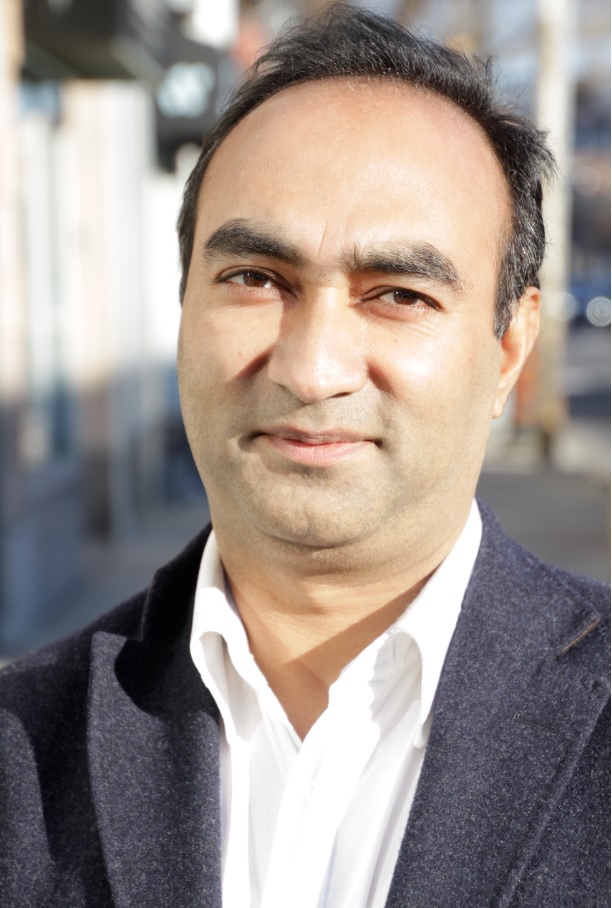
Practice Lead, Transportation — MA & Dk Creative Canvas
Pickering , ON
Educated at the University of Tokyo, Japan, Dewan spent more than sixteen years of his career in mobility master planning, smart innovation in urban innovation, shared mobility and transit planning projects in both Japan and Canada. Recently, he developed a new innovative mobility ecosystem master planning concept combining new mobility systems, innovative technologies, equitable use of public space, sustainable safety, and evidence-based scientific approach for rebuilding cities for people. The project concept and innovative applications was awarded by MIT Media Lab conference as “best planning system” and ITE Project of year in 2015.
Subsequently, he published a chapter of “Disrupting Mobility” by Springer University of California, Berkeley. He is currently writing a book titled “Our Mobility DNA” with Taylor and Francis and teaching a professional course to summarize innovative mobility concepts and outcomes of urban master planning projects.
He is a registered member as a Professional Engineer in Ontario, British Columbia, Nova Scotia and certified as a Professional Traffic Operation Engineer.
We always want to improve the quality of our courses. Please select any reasons why you feel this course is inadequate (check all that apply).
Thanks for the feedback.
Your input helps us improve EPIC's training programs.
We couldn't record that feedback.
This course's ID doesn't match anything in our records. Please refresh the page and try again, or contact registrations@epictraining.ca.